By Timber & Marsh
When most hunters think about deer hunting, the conversation usually turns toward stands, funnels, wind direction, and rut timing. But one of the biggest keys to consistently finding deer in North Florida starts with understanding one thing:
Where is the food?
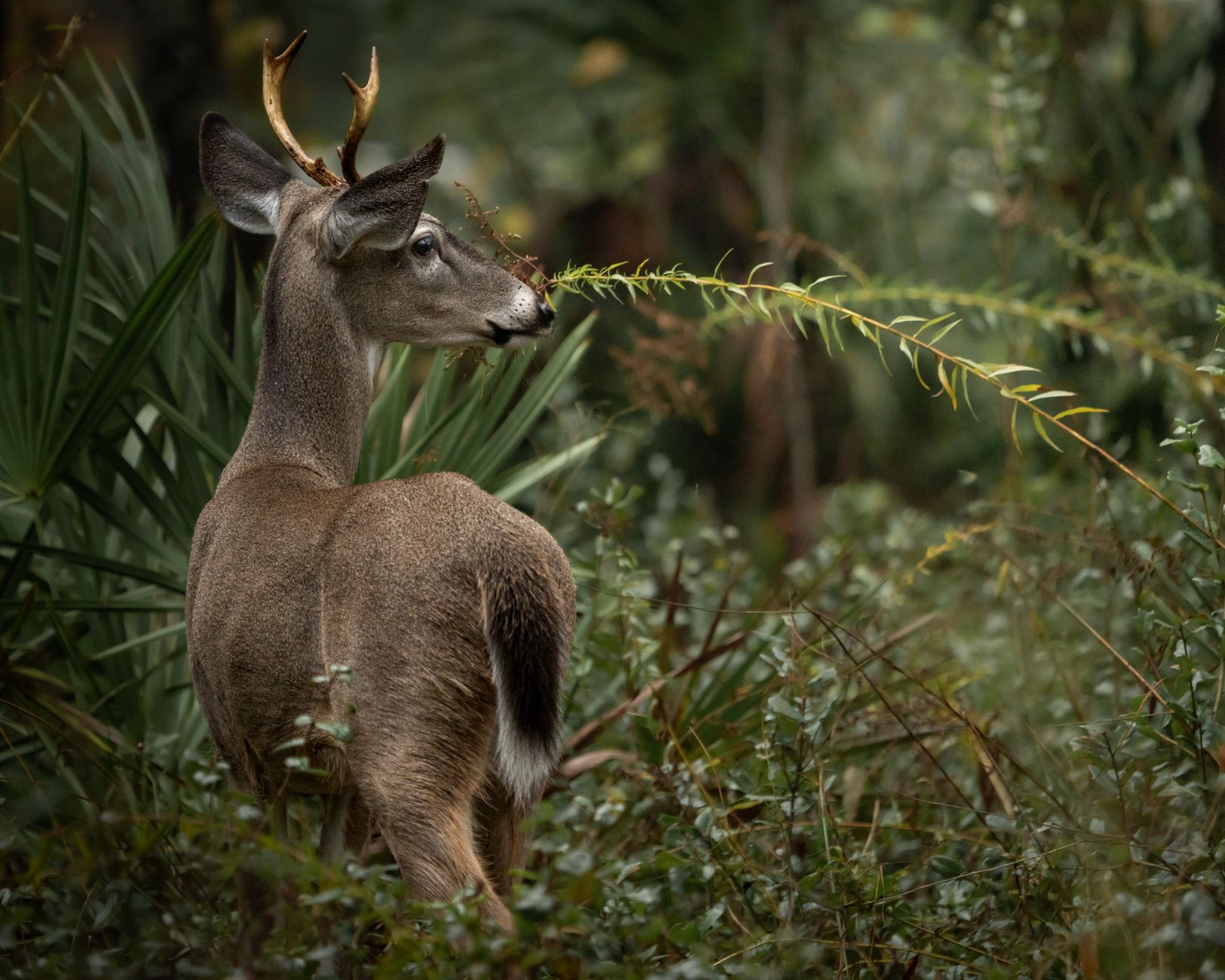
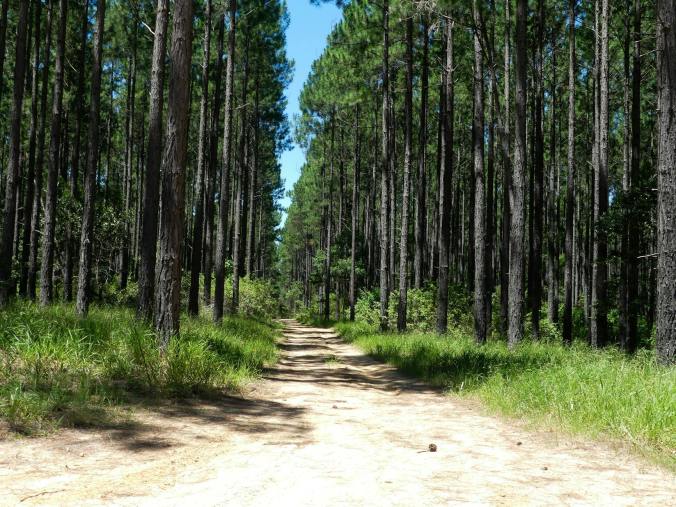
Florida’s deer live in a unique landscape of pine flatwoods, hardwood hammocks, swamps, agricultural edges, and river bottoms. Unlike agricultural states where deer can feed on massive soybean or corn fields, North Florida deer often survive by taking advantage of a wide variety of native plants, fruits, nuts, and browse.
Knowing these natural food sources can help you locate deer year-round — especially on public land where deer are not pressured the same way every hunter thinks.
Here are some of the best native deer foods found across North Florida.
1. Acorns — The King of North Florida Deer Food
If you ask most experienced Florida hunters what food source they want to find, the answer is simple:
White oaks and acorns.
Acorns provide deer with a high-energy food source packed with carbohydrates and fats. When acorns start dropping, deer will often change their patterns overnight.
Some of the best acorn-producing trees in North Florida include:
- Live oak
- Water oak
- Laurel oak
- Swamp chestnut oak
- Turkey oak
- Post oak
Where to find them:
Look for oak hammocks and transition zones:
- Along creek bottoms
- Around swamp edges
- Between pine plantations and hardwood areas
- Old homestead sites
- River floodplains
In places like Suwannee County, Lafayette County, Columbia County, and the surrounding Big Bend region, these hardwood pockets can be deer magnets.
A common mistake hunters make is sitting directly under the biggest oak tree. Mature bucks often stage nearby before entering the feeding area, especially during daylight.
Look for:
- Trails leading into oak flats
- Fresh droppings
- Rub lines
- Scrapes nearby
2. Saw Palmetto — The Florida Staple
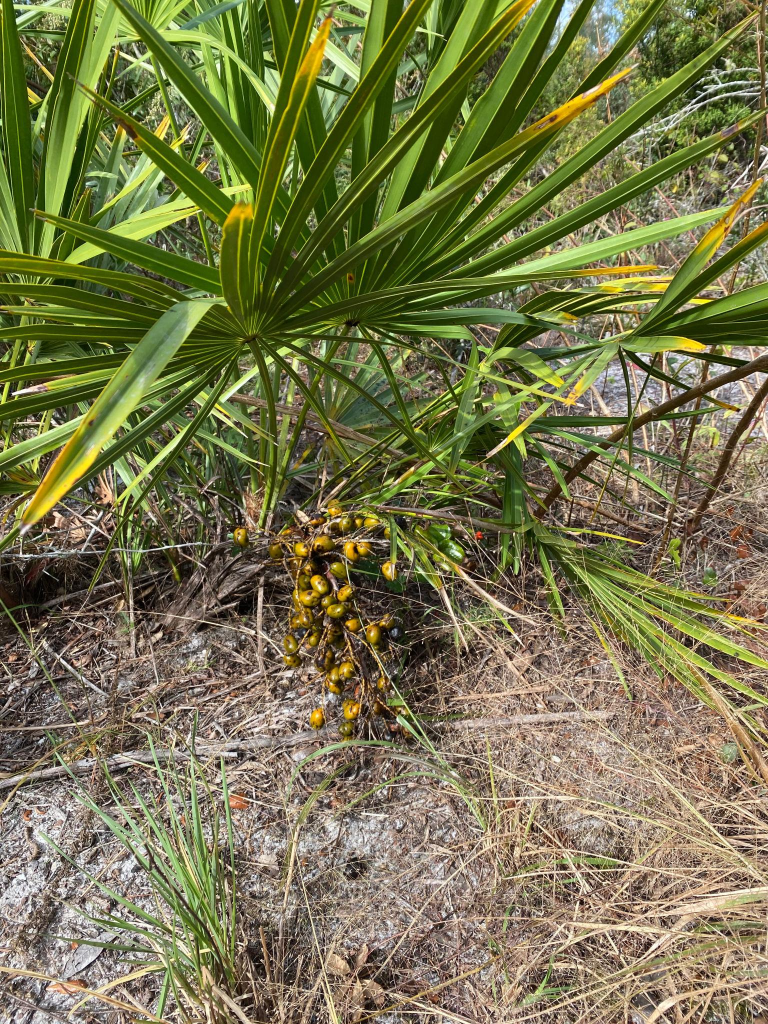
Saw palmetto is one of the most recognizable plants in Florida, and it plays a huge role in deer habitat.
While many people don’t consider palmetto a “food plot,” deer use it heavily.
They eat:
- Palmetto berries
- Young shoots
- Leaves
- Associated plants growing underneath
Palmetto also provides incredible bedding cover.
Where to find it:
Some of the best areas include:
- Pine flatwoods
- Sandhill habitats
- Scrub areas
- Old timberlands
Public hunting areas with large pine ecosystems often have plenty of palmetto.
Look for areas where palmetto meets:
- Young pines
- Hardwood drains
- Wet-weather creeks
Those edges create security and food together.
3. Persimmons — The September Deer Magnet
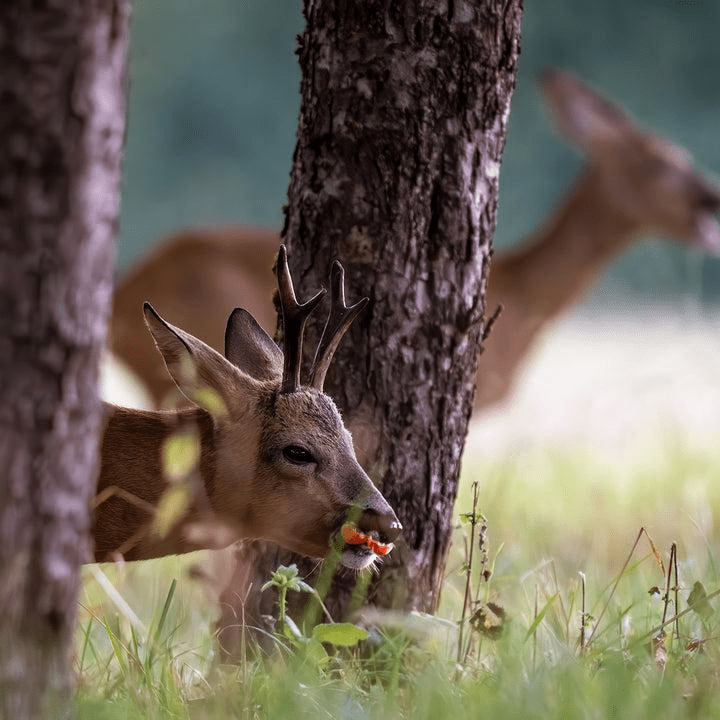
Persimmons are one of the most valuable native fruit trees for North Florida deer.
When they begin dropping, deer often abandon normal feeding patterns to target them.
Persimmons provide:
- Natural sugar
- Calories before winter
- A highly preferred food source
Where to find them:
Persimmons commonly grow around:
- Old fields
- Farm edges
- Fence rows
- Creek bottoms
- Abandoned homesteads
One of the best ways to find persimmons is not by looking for the tree — look for deer sign.
Find:
- Heavy trails
- Droppings
- Tracks
- Torn up ground beneath fruit trees
A single persimmon tree can be a better hunting location than 100 acres of average woods.
4. Mushrooms, Nuts, and Soft Mast
North Florida forests produce a surprising amount of natural deer food.
Deer consume:
- Mushrooms
- Wild grapes
- Blackberries
- Blueberries
- Hickory nuts
- Pecans
- Various seeds
These foods are especially important during seasonal transitions.
Where to find them:
Look around:
- Creek crossings
- Damp hardwood areas
- Edge habitat
- Open timber
Areas with a mixture of sun and shade usually produce the most diversity.
5. Native Browse — The Food Deer Eat Every Day
While fruits and acorns get the attention, deer survive on browse.
Browse includes the leaves and stems of woody plants.
Common Florida deer browse includes:
- Blackberry
- Greenbrier
- Honeysuckle
- Wax myrtle
- Young oaks
- Dogwood
- Maple
- Various native shrubs
A deer can eat thousands of bites of browse every day.
Where to find good browse:
Look for:
- Recent timber cuts
- Fire-managed pine forests
- Young regrowth areas
- Clear cuts 1–5 years old
Many hunters walk past these areas because they don’t look like “classic deer woods.”
In reality, young growth can hold deer all year.
6. Aquatic Plants & Swamp Edges
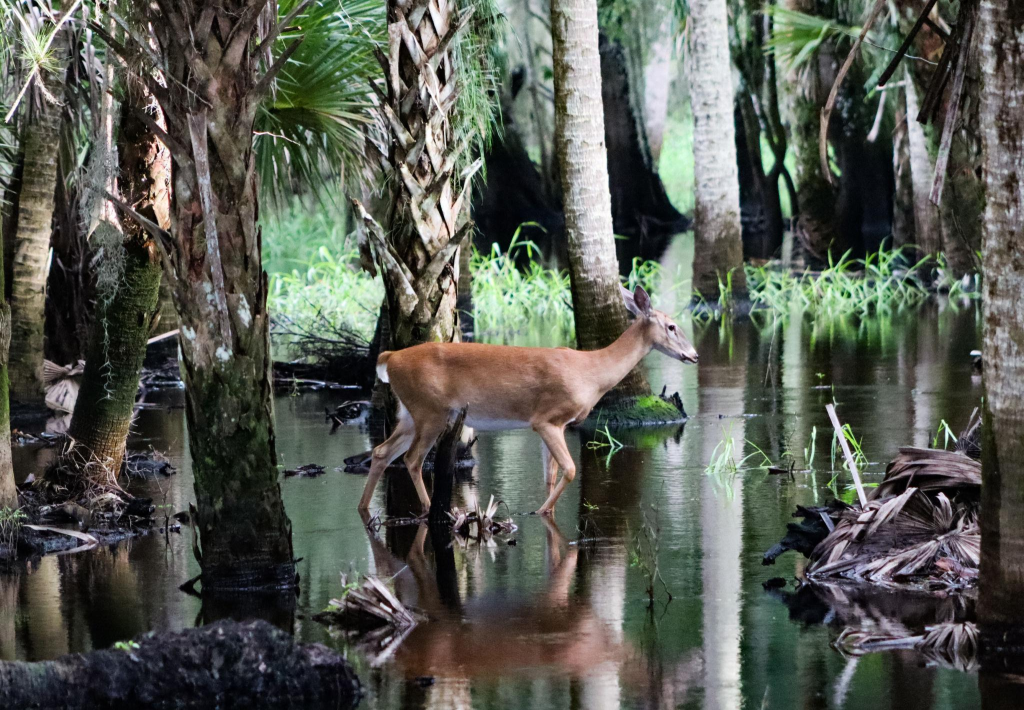
North Florida is full of wetlands, and deer are extremely comfortable living around them.
Swamp edges provide:
- Food
- Water
- Security
- Bedding cover
Deer will feed around:
- Cypress heads
- Marsh edges
- Creek bottoms
- Wet prairie areas
The key is finding the dry ground nearby.
Look for:
- High spots inside wet areas
- Trails crossing shallow water
- Deer tracks entering and exiting wetlands
How To Find Deer Food Before Hunting
Before hanging a stand or setting up a camera, spend time scouting.
Look for:
Feeding Sign
- Fresh droppings
- Browsed plants
- Tracks
- Torn fruit
Travel Sign
- Trails
- Creek crossings
- Pinch points
Bedding Areas
- Thick cover
- Palmetto patches
- Swamp islands
- Young pine growth
The best spots usually combine all three:
Food + Cover + Security
Final Thoughts
North Florida deer hunting is different from hunting farmland states. Success comes from learning the land.
A deer doesn’t need a food plot when the woods provide everything it needs.
The hunter who understands native foods will always have an advantage — because deer patterns are built around survival.
Find the food.
Find the deer.
Respect the land.
Timber & Marsh
Hunting • Fishing • Conservation • North Florida Outdoors